Skip links

Living with Misinformation

We all encounter misinformation every day. Thanks to digital technologies, we have access to more information than ever, which offers many advantages, but it can also be overwhelming. At the same time, we’re seeing these technologies used to spread misinformation—false or misleading content—like never before, making an already crowded space even more confusing.

The information we consume shapes our understanding, decisions, and participation in society. But what happens when it’s hard to tell what’s trustworthy and accurate? Misinformation can harm people and communities by spreading false narratives, reinforcing stereotypes, and distorting our views. This makes it harder to solve problems together and increases polarisation and tension between groups. So, the question is: What can we do?

There’s a lot we can do, both individually and together, to navigate misinformation. As this problem grows, more people are stepping up to help their communities.

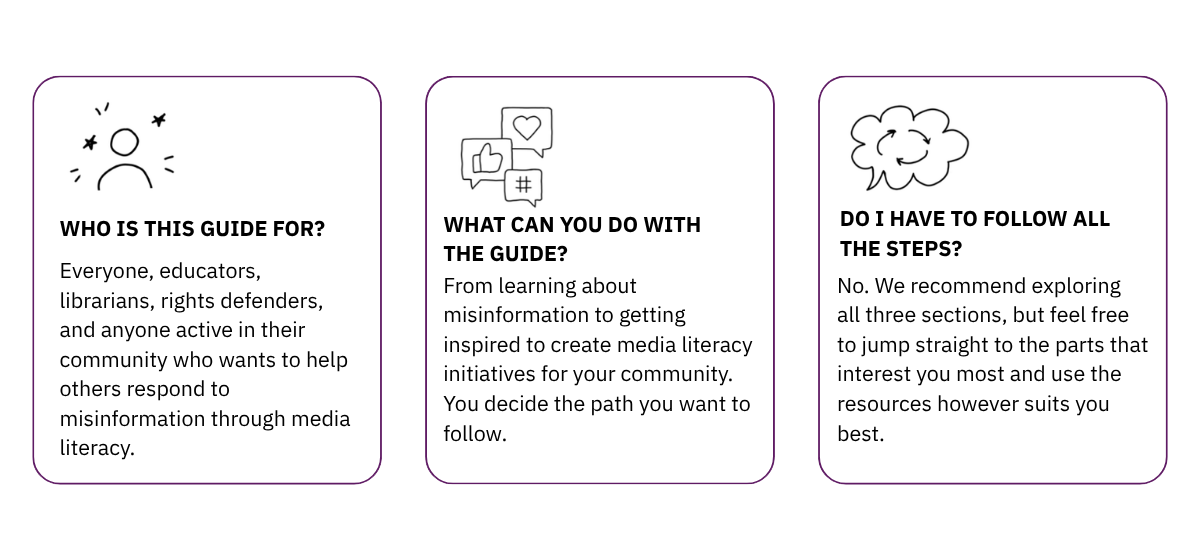
“Living with Misinformation: A Media Literacy Guide for Action” was created for you – for everyone: educators, librarians, rights defenders, and anyone active in their community who wants to help others respond to misinformation by increasing media literacy. Is this you? Download the guide to get the resources and skills, get inspired, and become a Media Literacy Champion.
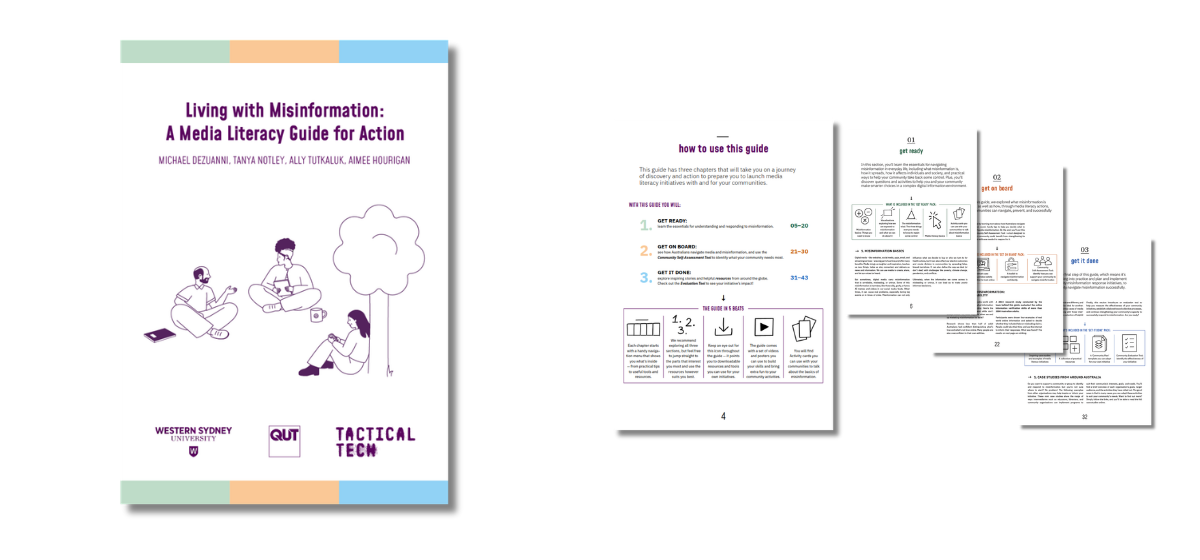
cover of guide book plus internal pages

The Media Literacy Guide for Action Sections

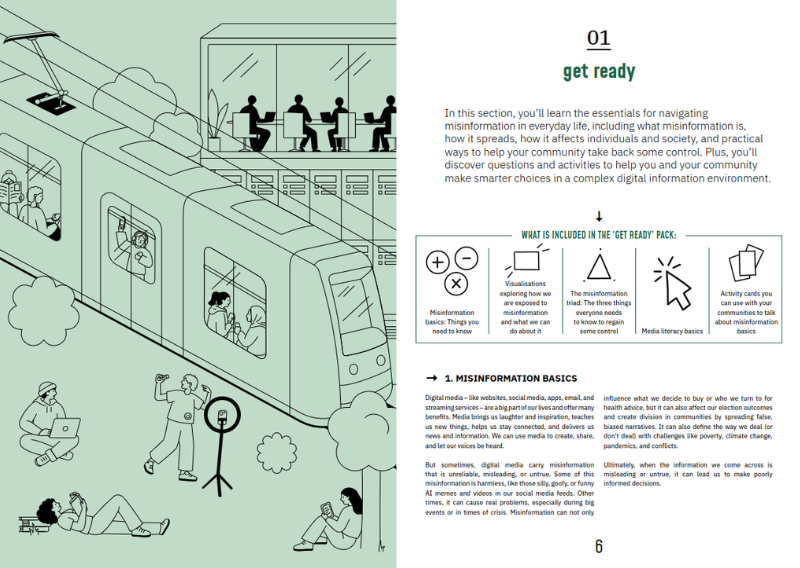
Step 1: Get Ready

Learn the essentials of navigating misinformation in everyday life, including what it is, how it spreads, how it affects individuals and society, and practical ways to help your community to respond. Discover questions and activities to help you and your community make smarter choices in a complex digital information environment.

What is included?
  • Misinformation basics: Things you need to know
  • Visualisations exploring how we are exposed to misinformation and what we can do about it
  • The misinformation triad: The three things everyone needs to know to respond
  • Media literacy basics
  • Activity cards you can use with your communities to talk about misinformation basics

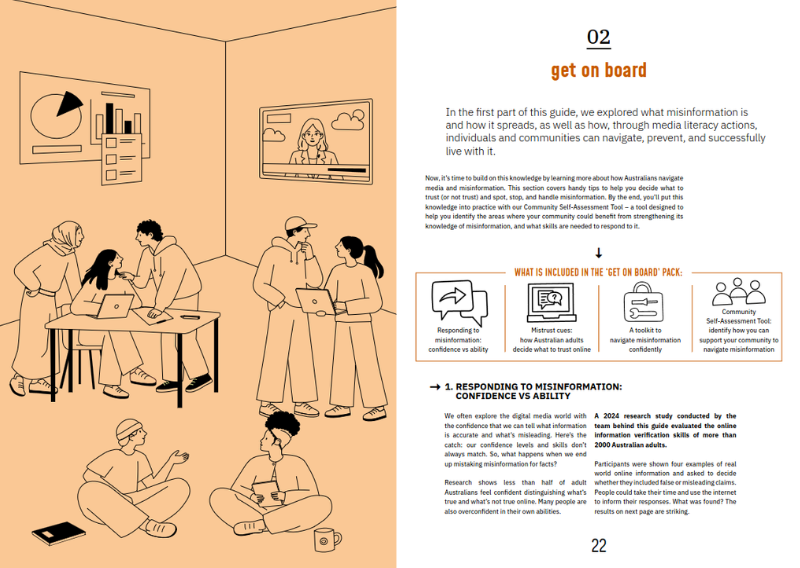
Step 2: Get On Board

Learn handy tips to help your community handle misinformation. Put this knowledge into practice with our Community Self-Assessment Tool, designed to help you identify where your community could benefit from stronger misinformation knowledge and the skills needed to respond.

What is included?

  • Responding to misinformation: confidence vs. ability
  • Mistrust cues: how Australian adults decide what to trust online
  • A quick toolkit to navigate misinformation confidently
  • Community Self-Assessment Tool: Identify how you can support your community to navigate misinformation

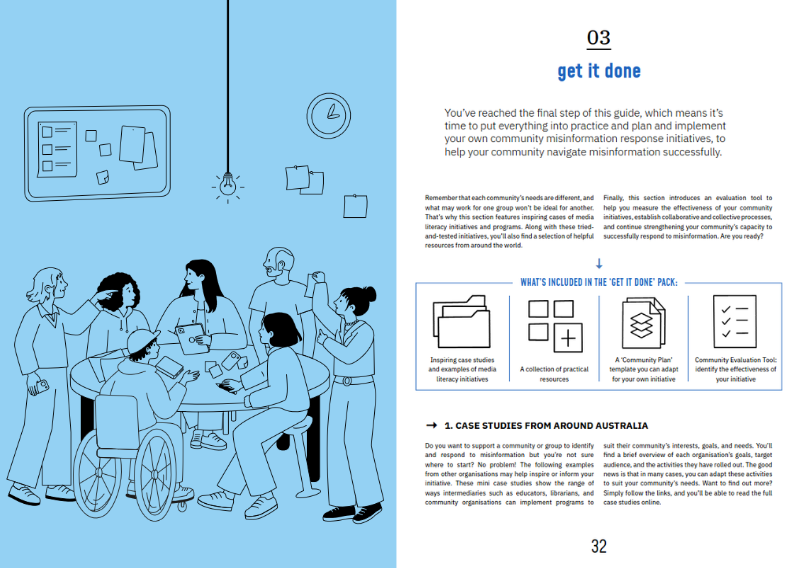
Step 3: Get It Done

Plan and implement your own community misinformation response initiatives to help your community navigate misinformation successfully. Get inspired by media literacy initiatives and resources worldwide, and learn how to evaluate the effectiveness of your community initiatives.

What is included?

  • Inspiring case studies and examples of media literacy initiatives
  • A collection of practical resources
  • A “Community Plan” template you can adapt for your own initiative
  • Community Evaluation Tool: identify the effectiveness of your initiative

“Taking a media literacy approach to misinformation means being curious about how media and technology work, being critically reflective about our own and others’ media use, and developing the confidence to make informed decisions when using media.”

Michael Dezuanni
Chair of Australian Media Literacy Alliance

What You Need to Know

Stay in the Loop!

A campaign featuring a series of videos and posters will follow the guide’s announcement. Stay connected to be the first to receive our updates!

Do you have Questions or Ideas?

We want to hear from you! If you have questions about the guide or ideas that you want to share with us, don’t hesitate to contact us at in**@***************rg.au

Acknowledgement

This Guide for Action was developed as part of a research project funded by the Australian Government through the Australian Research Council’s Linkage Project scheme.

The content was informed by research undertaken by Tanya Notley, Michael Dezuanni, Sora Park, T.J. Thompson, Aimee Hourigan.

The Guide was developed in collaboration with the Australian Broadcasting Corporation, the Australian Library and Information Association, the Museum of Australian Democracy at Old Parliament House, the National Film and Sound Archive of Australia, and the Royal Melbourne Institute of Technology.

Design and content partner: Tactical Tech
Design and icons: Lisa Post
Illustrations: Anna Pommer
Activity cards illustration: Mikaela Hourigan