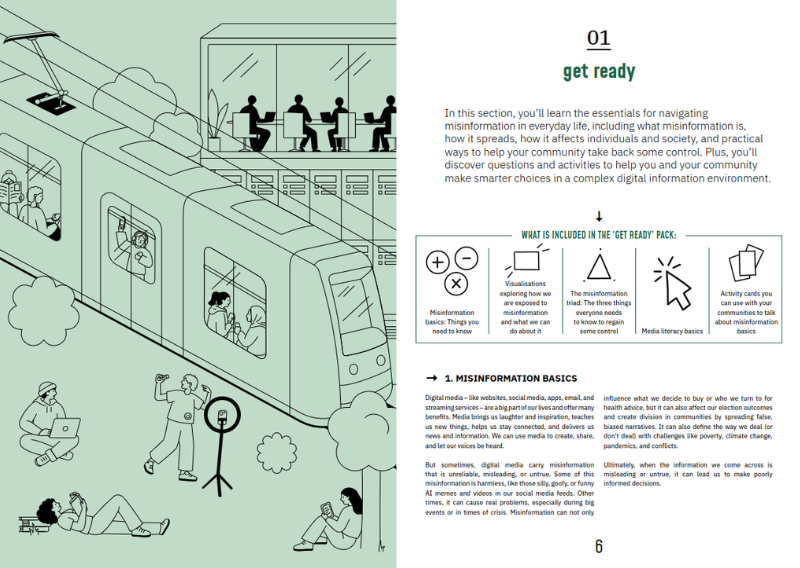
We all encounter misinformation every day. Thanks to digital technologies, we have access to more information than ever, which offers many advantages, but it can also be overwhelming. At the same time, we’re seeing these technologies used to spread misinformation—false or misleading content—like never before, making an already crowded space even more confusing.
The information we consume shapes our understanding, decisions, and participation in society. But what happens when it’s hard to tell what’s trustworthy and accurate? Misinformation can harm people and communities by spreading false narratives, reinforcing stereotypes, and distorting our views. This makes it harder to solve problems together and increases polarisation and tension between groups. So, the question is: What can we do?
There’s a lot we can do, both individually and together, to navigate misinformation. As this problem grows, more people are stepping up to help their communities.
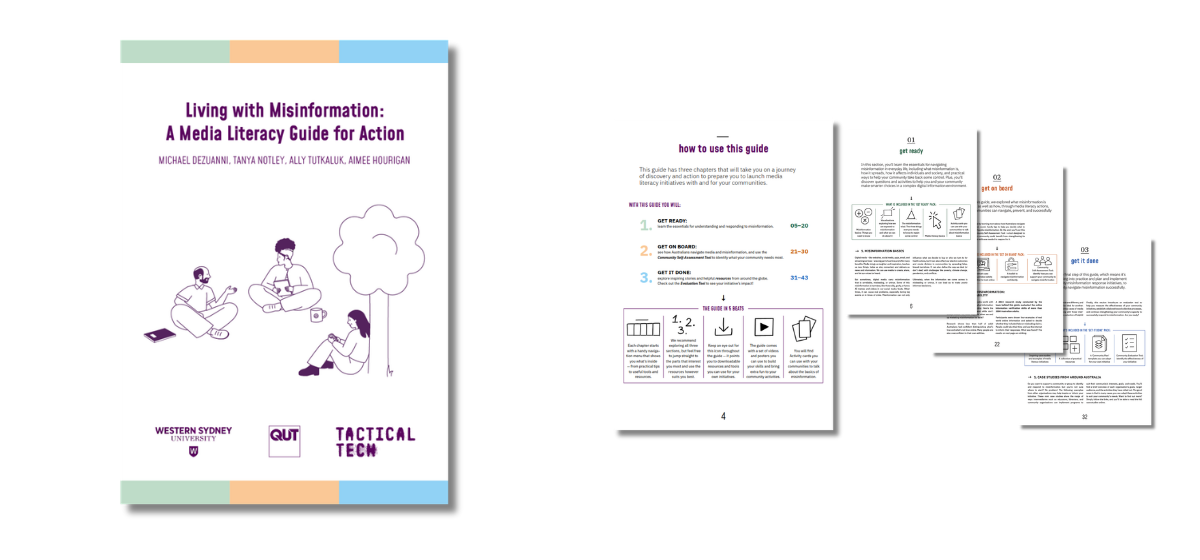
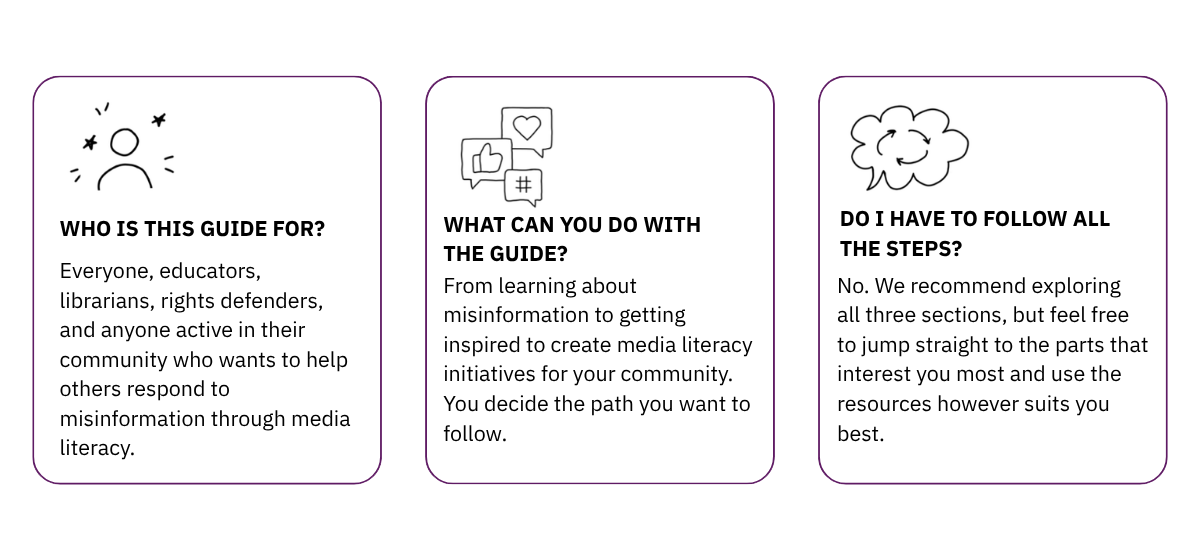
“Living with Misinformation: A Media Literacy Guide for Action” was created for you – for everyone: educators, librarians, rights defenders, and anyone active in their community who wants to help others respond to misinformation by increasing media literacy. Is this you? Download the guide to get the resources and skills, get inspired, and become a Media Literacy Champion.