

AMLA members featured at International Media Literacy Research Symposium
This month, several AMLA members and partners travelled to Rome to participate in the International Media Literacy Research Symposium. Held every two years, the symposium brings together a select group of just 200 researchers and practitioners from around the world, creating valuable opportunities for collaboration, networking and the exchange of ideas.
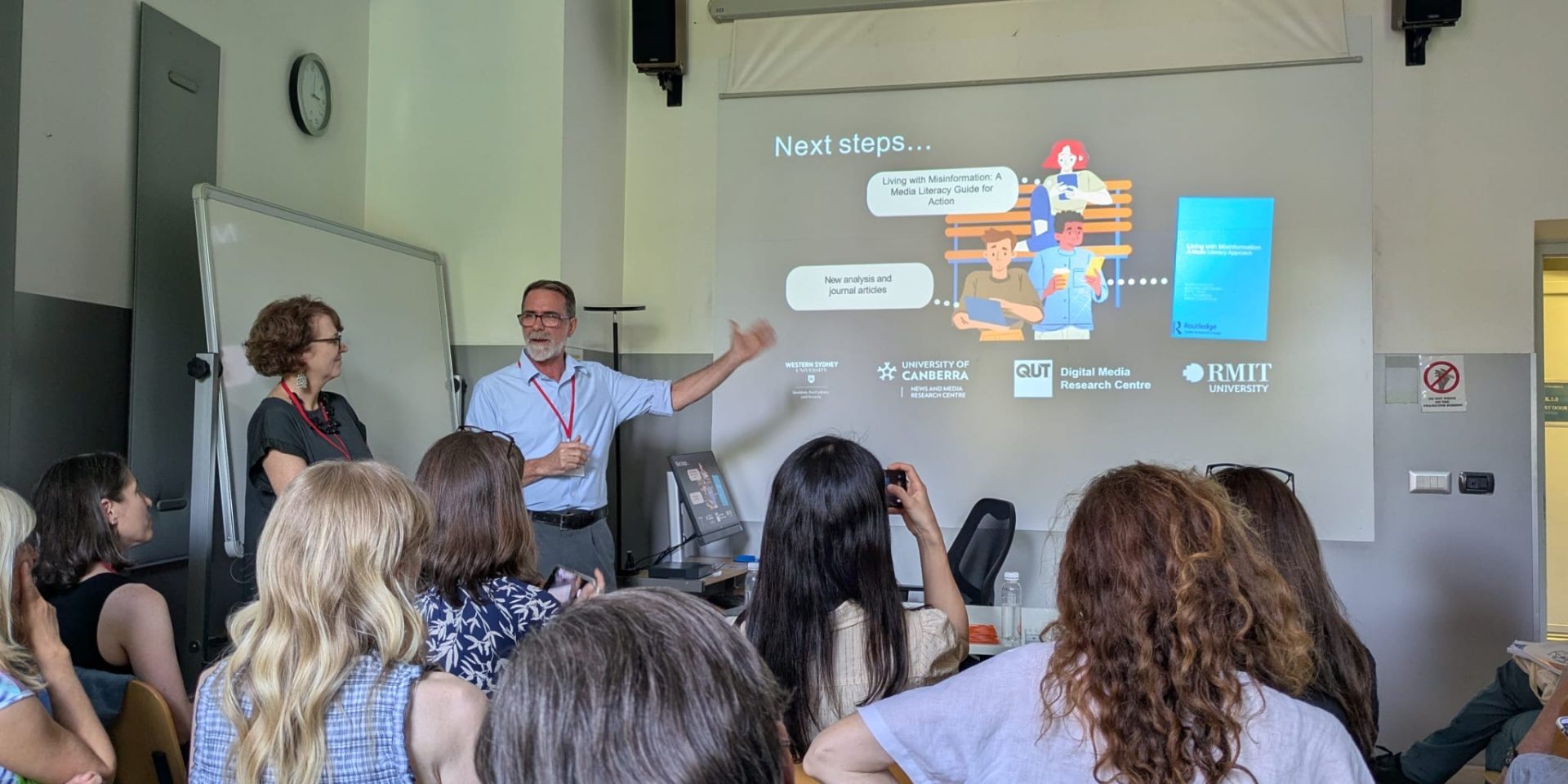
AMLA Chair, Professor Michael Dezuanni, presented new research with Dr Amanda Levido (Southern Cross University) exploring how a media literacy framework can be used to examine and analyse synthetic media, including generative AI.
Professor Tanya Notley and Professor Michael Dezuanni also shared key findings from their national research project investigating how public cultural institutions can strengthen media literacy as a response to misinformation. In addition, they presented work underway on the next iteration of the AMLA Media Literacy Model.
Representing ABC Education, Dr Aimee Hourigan presented on innovative library-based workshops designed to support young adults’ news literacy.
Western Sydney University PhD candidate Alex Wharton showcased his collaboration with the Museum of Australian Democracy, which explores how creative activities in the family home can help build civics and media literacy.
AMLA members were joined by a number of other Australian researchers and practitioners who contributed to the symposium.
Dr Rikki James from Edith Cowan University presented a proposal to strengthen media literacy education in Western Australian primary schools.
Cat Rodie and her colleague Meredyth Heaney from School News Project shared their model for supporting Australian primary school students to create and run their own school newspapers.
Dr Denise Chapman from Monash University discussed her creative and decolonial approaches to teaching media literacy through photography and poetry.
Western Sydney University PhD candidate, Daisy De Windt, discussed how media literacy can address health misinformation.
The symposium featured many of the world’s leading media literacy scholars and practitioners, including keynote speakers David Buckingham, Paul Mihailidis, Antonio López and Belinha De Abreu. It was inspiring to see such a strong Australian presence contributing to global conversations about the future of media literacy.